What is the difference between molecular diagnostics and traditional testing? It is not simply a contest between new and old. Molecular diagnostics detect genetic material, such as DNA or RNA, while traditional methods may identify organisms through culture, microscopy, or biochemical reactions. The practical difference can be striking: one test may detect a pathogen’s genetic signal in a sample, while another waits for visible growth in a culture dish. Neither method is automatically best. The right choice depends on the suspected condition, sample quality, turnaround time, and clinical question.
The market reflects growing interest in molecular tools. Grand View Research estimated the global molecular diagnostics market at about US$16.4 billion in 2023, with projected growth through 2030. That is a market estimate, not proof that molecular tests outperform every conventional method. The World Health Organization’s Essential Diagnostics List also underscores a broader point: reliable diagnosis requires access to appropriate tests, not just advanced technology. As WHO Director-General Dr. Tedros Adhanom Ghebreyesus has put it, “Without diagnosis, there can be no treatment.”
Still, the comparison is not clean. Molecular tests can be highly sensitive, but contamination, cost, and interpretation matter. Culture can take longer, yet it may reveal whether an organism is viable and support susceptibility testing. Small details matter: a swab collected too late, or a poorly handled sample, can change the result. This guide compares speed, accuracy, cost, and clinical use—while asking a less comfortable question: when does newer technology genuinely improve care?
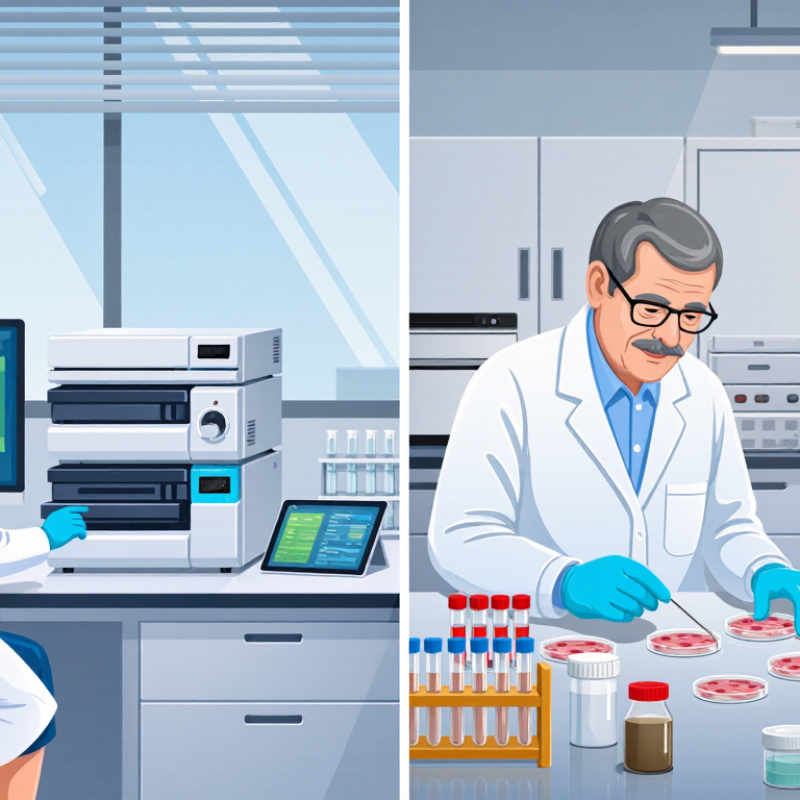
Molecular diagnostics look for genetic material, usually DNA or RNA, from a microorganism or human cells. A PCR-based test, for example, can identify a small amount of a virus’s genetic material in a swab. Some molecular tests also detect specific genetic changes linked to inherited conditions or treatment decisions. They do not automatically show whether an organism is alive or causing symptoms now. That distinction is easy to miss.
Traditional testing covers several methods, not one. Microscopy detects visible cells or organisms in a sample, while culture checks whether microbes grow under suitable conditions. Antigen tests detect particular proteins; antibody tests detect the body’s immune response, which may appear later. Blood chemistry tests measure substances such as glucose or enzymes. Each method answers a different question, and timing, sample quality, and prior treatment can affect results. No test tells the whole story.
Tips: Check what the test detects, when the sample was collected, and how results should be interpreted. A negative result may not rule out disease if testing happened too early or the sample was poor. Discuss unclear findings with a qualified clinician. Testing is useful, but context matters.
Molecular diagnostics and traditional tests examine different kinds of evidence. A PCR-based assay extracts genetic material from a swab or blood sample, then amplifies selected DNA or RNA targets. Think of copying one faint line until it becomes measurable. Fluorescent signals can reveal whether the target sequence is present, while controls help flag failed extraction or contamination. Some assays detect several targets; others look for one organism or mutation. Results still depend on specimen quality and the targets included in the test. Fast, but not magic.
Traditional methods include microscopy, antigen testing, and culture. Microscopy looks for visible organisms; antigen tests detect their proteins; culture waits for organisms to grow. The CDC’s tuberculosis diagnostic guidance reports that culture can take 2–8 weeks, while nucleic acid amplification may return results within hours. Those figures describe tuberculosis workflows, not every pathogen or laboratory. Culture can show whether an organism is viable and support drug-susceptibility testing, which a targeted molecular result may not provide alone. Conversely, a negative molecular result cannot rule out infection when the specimen, timing, or target is wrong. Clinicians often combine methods. It is less tidy than a comparison chart, but closer to real diagnostic work.
Molecular assays can detect small amounts of genetic material, often with high analytical sensitivity. But sensitivity is not the same as a correct clinical answer. Contamination, early sampling, and residual genetic material after infection can affect interpretation. Traditional methods, such as culture, microscopy, or antigen testing, may be less sensitive for some conditions. Yet they can show viable organisms or provide other useful clues. The right comparison depends on the disease, specimen, and question being asked. Details matter.
Speed varies, too. Some molecular tests return results within hours, while centralized testing may take longer because specimens travel to a laboratory. A rapid antigen test can take minutes; culture may require days. In practice, the fastest result is not always the fastest care. Staffing, confirmation steps, and follow-up shape the timeline. Cost is similarly uneven. Molecular testing may require specialized instruments and higher upfront spending. Traditional methods can be cheaper, though repeat testing or delayed treatment may add costs. Insurance and local laboratory capacity also change the bill. Not always. A small clinic with limited equipment faces a different trade-off from a large hospital. It is tempting to rank one approach outright, but that oversimplifies a decision clinicians make using symptoms, disease prevalence, and test limitations. Even good evidence has edges.
Influenza testing example: rapid molecular NAATs compared with rapid antigen tests (RIDTs).
How to read this: Sensitivity is the share of infected cases a test detects; it is not overall accuracy. Bars show range midpoints: molecular NAAT sensitivity 90–100% and turnaround 15–30 minutes; RIDT sensitivity 50–70% and turnaround 10–15 minutes. Ranges vary by test and setting.
Cost: There is no single comparable price across tests or healthcare settings. Costs depend on the specific assay, equipment, location, and coverage; molecular testing may require more specialized equipment. Sources: CDC: Rapid Influenza Diagnostic Tests and CDC: Molecular Assays.
Molecular diagnostics are most useful when clinicians need to identify a specific pathogen, mutation, or other genetic marker. A molecular test can detect small amounts of target material, sometimes before conventional methods show clear results. This can help guide timely decisions, especially when symptoms overlap or an infection is difficult to culture. But a positive result does not always explain the patient’s full condition. Timing, sample quality, and clinical history still matter.
Traditional testing, including microscopy, culture, and antigen-based methods, remains valuable when clinicians need to see organisms, assess growth, or obtain a result quickly with familiar workflows. Culture can also reveal whether a microorganism is viable and support further susceptibility testing. These methods may be more practical in settings with limited laboratory resources. They can, however, take longer or miss targets present at low levels. Neither approach is automatically better.
Tips: Match the test to the clinical question. Ask when the sample was collected and whether treatment had already started. Check how quickly results are needed, and whether a positive finding would change care. When results conflict with symptoms, clinicians may consider repeat testing or another method. Real-world testing is not always tidy; one imperfect sample can complicate the picture.
Choosing a diagnostic test starts with the clinical question, not the newest technology. Is the goal to detect a pathogen quickly, identify a genetic change, or learn whether an organism can grow? Molecular tests can detect small amounts of genetic material and often return results quickly. Traditional methods, such as microscopy and culture, may show visible organisms or provide information about growth and drug susceptibility. Different questions need different evidence.
The sample matters. A molecular test performed on a poorly collected swab may miss the target, while a carefully handled sample can improve reliability. Timing matters, too: a test may detect genetic material that remains after an infection is no longer active. That result needs context. A clinician may consider symptoms, exposure, examination findings, and the patient’s health before interpreting it. Fast is useful. It is not the same as definitive.
Practical factors also guide the choice: turnaround time, cost, laboratory access, and whether the result will change care. In an urgent setting, speed may carry extra weight. When treatment depends on susceptibility, culture may offer information a molecular result does not. A common blind spot is assuming that newer means better. It is worth asking what a test can detect, what it can miss, and how an unexpected result will be checked. Sometimes the best answer comes from combining methods, though that can add time and expense.
| Decision Dimension | Molecular Diagnostics | Traditional Testing | What Should Guide the Choice? |
|---|---|---|---|
| What the test detects | Pathogen or human nucleic acid, commonly DNA or RNA, using methods such as PCR or other nucleic-acid amplification techniques. | Depends on the method: culture detects viable organisms; microscopy visualizes cells or organisms; antigen tests detect pathogen components; serology detects the patient’s antibodies. | Choose a method that detects the target relevant to the clinical question. A positive result for genetic material does not always prove that a microorganism is viable or causing current symptoms. |
| Typical use cases | Rapid identification of specific pathogens or genetic targets, including situations where the target may be present at low levels or be difficult to grow. | Culture can identify organisms and support phenotypic antimicrobial susceptibility testing. Microscopy can provide direct visual findings; antigen testing can support rapid detection; serology can help assess immune response or past exposure. | Match the test to the suspected condition, the stage of illness, the specimen, and whether the clinician needs organism identification, evidence of exposure, or susceptibility information. |
| Turnaround time | May range from under an hour to several hours for an individual assay; transport, batching, and laboratory workflow can extend the time to a reported result. | Microscopy and some antigen tests may provide results quickly. Culture commonly takes longer—often days, and sometimes longer depending on the organism and specimen. Serology timing varies by assay and testing schedule. | Compare the expected time to a clinically actionable result, not just the instrument run time. A rapid result is most useful when it can change immediate care or infection-control decisions. |
| Sensitivity and specificity | Can be highly sensitive and specific for the targets included in a validated assay, but performance varies by assay, specimen quality, collection timing, and target sequence. | Performance is method- and condition-specific. Culture may be affected by prior treatment or low organism viability; microscopy depends on specimen quality and observer skill; antibody tests depend on the immune response and timing. | Review performance data for the exact assay and intended use. No testing method is universally more accurate, and a negative result may not rule out disease when pre-test suspicion is high. |
| Specimen and timing | Requires an appropriate specimen and adequate target material. Contamination, inhibitors, or collection at the wrong stage can affect results. | Requirements vary: culture needs a suitable specimen and viable organisms; serology generally requires blood and an appropriate interval for antibodies to develop; microscopy and antigen tests have their own collection requirements. | Follow the test’s specimen instructions and consider symptom onset, prior treatment, and the biological window in which the target is detectable. |
| Antimicrobial resistance information | Some assays detect selected resistance genes or mutations. A detected marker can be informative, but it may not capture every resistance mechanism or always predict the full susceptibility phenotype. | Phenotypic susceptibility testing, usually performed on a cultured isolate, measures how the organism responds to tested antimicrobial agents. | If treatment depends on susceptibility, determine whether a molecular result is sufficient for the decision or whether culture and phenotypic testing are also needed. |
| Main limitations | Only detects targets included in the assay; genetic material may remain detectable after organisms are no longer viable. Contamination or target variation may affect interpretation. | Culture can be slow and may be negative after antimicrobial treatment or when organisms are difficult to grow. Microscopy and antigen testing may have limited sensitivity for some conditions; antibody results may not distinguish current from past infection. | Consider what a positive or negative result can—and cannot—establish. Add or repeat testing when the result conflicts with the clinical picture. |
| Cost and infrastructure | Costs and equipment needs vary widely. Some assays require specialized instruments, trained staff, quality controls, and reliable laboratory infrastructure. | Costs and resource needs also vary. Basic microscopy may need less specialized equipment, while culture requires suitable facilities, time, and trained personnel. | Assess total cost, access, staffing, quality assurance, and whether testing is available locally or requires referral—not just the price of a single test. |
| Best-fit decision | Consider when rapid target-specific detection is important, the target is difficult to culture, or a validated molecular assay addresses the clinical question. | Consider when a viable isolate, phenotypic susceptibility result, direct visualization, antigen detection, or evidence of an antibody response is needed. | Use clinical presentation, disease prevalence, pre-test probability, specimen quality, urgency, and the consequences of a false result to select or combine tests. |
Important: These are general comparisons, not universal performance claims. Test characteristics and recommended use differ by disease, assay, specimen, and laboratory. Interpretation should follow current clinical guidance and the specific test instructions.
They detect selected genetic material, usually DNA or RNA, from microorganisms or human cells. A swab may contain only a tiny target amount.
No. Genetic material can remain after an infection is no longer active. Symptoms and timing still matter.
Microscopy looks for visible organisms, while antigen tests detect proteins. Culture checks whether microbes grow. Different clues.
Some molecular results may arrive within hours. For tuberculosis, culture can take two to eight weeks; other workflows vary.
A poorly collected swab may miss its target. Collection and handling can change what a test detects.
Not always. Early testing, a weak sample, or an untested target may produce a negative result despite disease.
Culture can show whether an organism grows and may support drug-susceptibility testing. It can take longer, though.
They consider the clinical question, symptoms, timing, sample, access, cost, and whether results may change care. Newer is not automatically better.
In 2026, molecular diagnostics and traditional testing offer different ways to identify disease. Molecular methods look for genetic material, such as DNA or RNA, while traditional approaches may detect proteins, antibodies, cells, or visible changes in a sample. The key question—what is the difference between molecular diagnostics and traditional testing—comes down to what each method detects and how it produces a result. Molecular tests analyze targeted biological signals, whereas traditional tests use techniques such as microscopy, culture, or chemical analysis.
Neither approach is best for every situation. Molecular testing can provide sensitive, targeted results and may be useful when rapid identification or detection of small amounts of a pathogen matters. Traditional methods can offer broader observations, established workflows, or information about how organisms behave, though some may take longer. Accuracy, turnaround time, availability, and cost depend on the specific test and sample. Clinicians and laboratories choose based on the question being asked, the patient’s circumstances, the urgency of the result, and whether additional testing is needed.

BioX Medical