China has become an important force in the global molecular diagnostics industry. Its laboratories develop PCR tests, sequencing platforms, and automated systems for hospitals and public health programs. These tools detect genetic signals that traditional methods may miss. In a busy clinical laboratory, a small sample can guide decisions within hours. That speed matters when infection risks change quickly. It also supports cancer testing, inherited disease screening, and treatment selection. The central question is clear: why is molecular diagnostics becoming increasingly important worldwide? The answer involves earlier detection, more precise care, and stronger disease surveillance.
China’s progress reflects large research networks, expanding healthcare demand, and growing manufacturing capacity. Domestic companies now supply instruments, reagents, and software to many markets. However, scale alone does not prove reliability. Quality depends on validated methods, trained professionals, accurate controls, and transparent performance data. No system is flawless. Testing access remains uneven between major cities and rural communities. Some laboratories may also face shortages of skilled staff or stable equipment maintenance. These weaknesses deserve honest attention.
Global buyers should examine evidence, not marketing claims. They need to review sensitivity, specificity, regulatory status, and real-world clinical performance. Independent evaluation can strengthen confidence in Chinese technologies. Responsible use also requires protecting patient privacy and explaining results clearly. Molecular diagnostics can connect a patient’s sample with faster, more informed care. Yet its value depends on trust, accessibility, and consistent standards. China’s role matters worldwide because innovation becomes meaningful only when it improves reliable healthcare across borders.
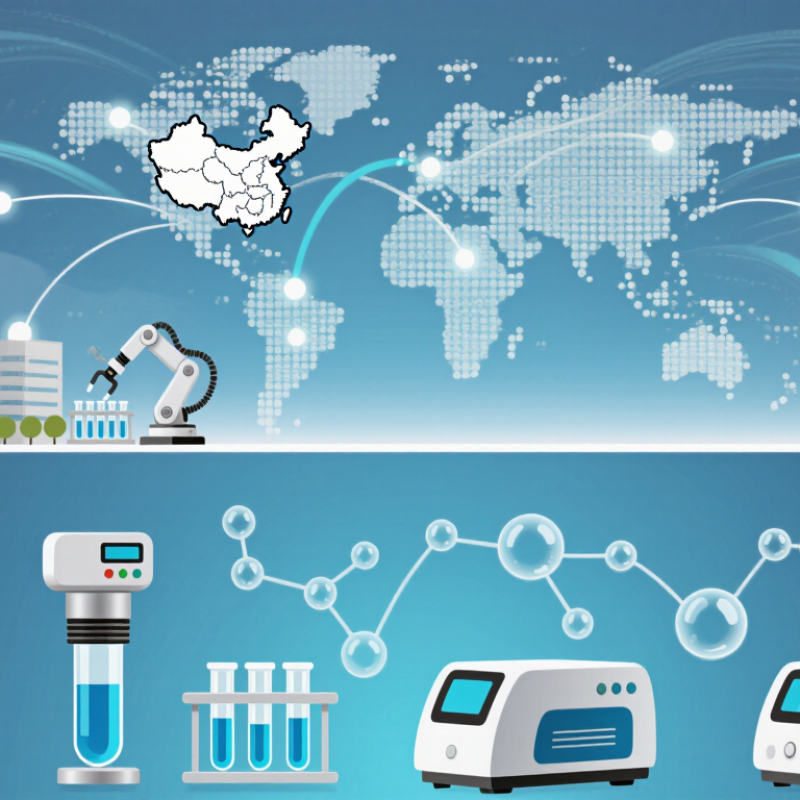
Definition and Scope of Molecular Diagnostics in China
China Top Molecular Diagnostics Why It Matters Worldwide?
Molecular diagnostics in China refers to tests that examine DNA, RNA, or related molecular signals. These tests can identify infections, genetic variations, cancers, and treatment responses. The field includes PCR, sequencing, gene expression analysis, and other nucleic acid methods. Its scope extends from hospital laboratories to public health centers, research institutions, and community testing services.
In clinical settings, molecular diagnostics may support early infection detection, tumor profiling, inherited disease assessment, and prenatal screening. It can also guide medication choices when a molecular marker affects treatment response. China’s large and diverse population creates valuable evidence across different regions and disease patterns. However, access and laboratory capacity are not equal everywhere. A precise instrument cannot repair poor sampling. Nor can a fast result replace careful clinical judgment. This is where practice becomes less perfect, and reflection matters.
Tips: Check specimen quality, test purpose, and reporting standards before interpreting results. Ask whether the method fits the patient’s condition. Laboratories should maintain documented quality controls, trained staff, and transparent communication. Results should be reviewed with clinical history, not treated as isolated answers. International cooperation also requires consistent terminology and responsible data handling. Small differences in validation can change confidence. That detail is easy to overlook.
China Top Molecular Diagnostics: Why It Matters Worldwide?
Molecular diagnostics detect DNA, RNA, or other molecular biomarkers to support disease screening, diagnosis, prognosis, treatment selection, and monitoring. In China, the large burden of cancers commonly associated with molecular testing highlights the importance of scalable and accurate diagnostic technologies.
Estimated new cancer cases in China in 2022 by selected cancer type. Molecular diagnostics can help identify clinically relevant genetic alterations and biomarkers, but the figures shown represent disease burden rather than molecular test volume.
Source: International Agency for Research on Cancer (IARC), Global Cancer Observatory, GLOBOCAN 2022.
China’s Leading Molecular Diagnostic Technologies and Applications
China’s leading molecular diagnostic technologies combine PCR, gene sequencing, isothermal amplification, and microfluidic testing. These tools detect genetic material in small samples, sometimes within hours. Their value extends beyond hospital laboratories. Infections can be identified earlier, while sequencing can help clinicians investigate inherited conditions and selected cancers. That matters. China’s large and varied healthcare system also offers practical lessons in deploying tests across urban hospitals and less-resourced settings.
Applications depend on careful interpretation, not just sensitive instruments. A positive result may need confirmation, and genetic findings require clinical context. During outbreaks, consistent sampling and data quality help make results more useful for public health teams. Yet access, staff training, and validation standards can vary between facilities. Progress is real, but uneven. More testing does not automatically mean better care; that point is easy to overlook.
Tips: Check whether a test has been clinically validated for its intended use. Ask how samples are collected, how quickly results are reported, and whether a qualified professional explains them. Small details count.
Key Factors Behind China’s Molecular Diagnostics Growth
China’s Molecular Diagnostics Growth: Why It Matters Worldwide?
China’s molecular diagnostics growth comes from strong investment, urgent clinical needs, and expanding technical capacity. Large hospitals now use molecular tests for infections, inherited conditions, and cancer-related decisions. These tests can detect small genetic signals before symptoms become obvious. That speed matters in crowded clinics and remote communities.
A broad manufacturing base has also reduced dependence on imported components. Local production supports reagents, instruments, plastic consumables, and laboratory software. Lower supply costs can improve access for smaller hospitals. Public health programs have further increased testing capacity, especially during infectious disease emergencies. Practical experience in high-volume laboratories has improved workflow design and automation.
Talent is another important factor. Universities, hospitals, and research centers are training specialists in genetics, bioinformatics, and laboratory quality management. International collaboration has also helped technical knowledge move faster. Still, the picture is not flawless. Data quality can differ between regions. Smaller facilities may lack trained staff or reliable cold-chain storage. This deserves scrutiny. Faster testing does not always mean better testing. Validation, transparent reporting, and careful interpretation remain essential. China’s progress may influence global supply chains, test pricing, and access, but sustainable growth will depend on consistent standards and evidence across diverse healthcare settings.
Global Impact on Healthcare, Research, and Disease Control
China’s molecular diagnostics sector matters because disease control now depends on speed, scale, and affordability. PCR, isothermal amplification, and sequencing can identify pathogens before symptoms become obvious. In crowded clinics, a faster result can change isolation, treatment, and contact tracing within the same day. That practical difference reaches far beyond China.
The World Health Organization’s Global Tuberculosis Report 2024 estimated 10.8 million tuberculosis cases and 1.25 million deaths in 2023. Many patients still face delayed or incomplete testing. Scalable molecular systems could help regional laboratories detect drug resistance earlier, especially where advanced equipment remains limited. Yet access is not only about producing more instruments. Training, calibration, sample transport, and external quality assessment matter just as much.
Research also benefits from China’s expanding diagnostic capacity. Large datasets can support pathogen surveillance, cancer screening studies, and studies of genetic variation. The WHO’s 2024 Global Hepatitis Report estimated 1.3 million deaths from viral hepatitis in 2022, showing why dependable testing remains urgent. Lower-cost platforms may extend screening into smaller hospitals and rural clinics. That promise needs caution. A test can be technically accurate but clinically useless if samples degrade during transport. Data sharing also requires privacy safeguards and transparent validation. The picture is not flawless. Independent evaluation, local clinical evidence, and honest reporting of false results must accompany rapid global deployment.
China Top Molecular Diagnostics: Why It Matters Worldwide — Global Impact on Healthcare, Research, and Disease Control
| Area |
Verified Global Data |
How Molecular Diagnostics Matter |
Source |
| Tuberculosis (TB) |
An estimated 10.8 million people fell ill with TB worldwide in 2023; about 1.25 million people died from the disease. |
Rapid molecular tests can detect TB and drug resistance, helping clinicians select treatment sooner. WHO recommends eligible rapid molecular diagnostic tests as an initial test for people with signs and symptoms of TB. |
WHO, Global Tuberculosis Report 2024 |
| Cervical cancer |
Approximately 660,000 new cases and 350,000 deaths occurred globally in 2022. |
HPV DNA testing is a high-performance screening approach that can identify high-risk infections before cancer develops. Wider access to reliable testing supports earlier follow-up and treatment. |
WHO, Cervical cancer fact sheet |
| Cervical cancer elimination target |
WHO’s 2030 elimination targets include screening 70% of women with a high-performance test by age 35 and again by age 45. |
Scalable molecular HPV testing can help health systems expand screening coverage, including through organized programmes and appropriately validated self-sampling pathways. |
WHO, Cervical Cancer Elimination Initiative |
| Global cancer burden |
An estimated 20 million new cancer cases and 9.7 million cancer deaths occurred worldwide in 2022. |
Validated molecular tests can characterize tumour biomarkers and inherited variants, supporting diagnosis, risk assessment, treatment selection, and research. Their role depends on the cancer type and clinical guidelines. |
IARC, Global cancer burden estimates for 2022 |
| Hepatitis B and C |
WHO estimated that 254 million people were living with hepatitis B and 50 million with hepatitis C in 2022. |
Nucleic-acid tests can detect or quantify viral genetic material. Results can support diagnosis, treatment decisions, and monitoring of response to antiviral therapy. |
WHO, Hepatitis B fact sheet; WHO, Hepatitis C fact sheet |
| Public-health surveillance and research |
WHO’s 2023 TB estimates and 2022 cancer estimates illustrate the scale of diseases requiring comparable, timely information across countries. |
Sequencing and other molecular methods can help identify pathogen or tumour variants, support outbreak investigation, and generate data for research. Results are most useful when paired with quality assurance, representative sampling, and appropriate data sharing. |
WHO TB reporting; IARC cancer estimates |
Data note: Figures are global estimates for the years stated, not measurements of any single country’s market share or diagnostic capacity. Molecular tests complement clinical assessment and other laboratory methods; availability, accuracy, and recommended use vary by test and setting.
Challenges, Regulation, and Future International Opportunities
China Top Molecular Diagnostics: Why It Matters Worldwide?
China’s molecular diagnostics sector can support global testing through manufacturing capacity, clinical research, and wider access to assays. But international growth depends on more than producing tests at scale. The Lancet Commission on Diagnostics estimated in 2021 that 47% of people worldwide had little or no access to diagnostic testing. The gap is real. Affordable, reliable molecular tests could help close it, particularly where laboratories and trained staff are scarce.
Regulation remains a practical hurdle. Exporting an assay means meeting each market’s requirements for evidence, quality systems, and registration; translating its instructions is not enough. Tests also need validation across different populations and sample-handling conditions. A rapid result can look impressive on paper, yet fail if clinics lack stable electricity, cold storage, or trained operators. That deserves more attention. International partnerships can help adapt tests locally, but local validation should not become a box-ticking exercise.
Tips: Before entering a new market, map its registration pathway and check whether local labs can run the test reliably. Compare performance using representative samples, not just ideal ones. Innovation matters—but so does fit.
Conclusion
Molecular diagnostics in China covers a broad range of methods that analyze genetic material and other molecular markers to identify diseases, guide treatment, and support public health research. Technologies such as polymerase chain reaction, genetic sequencing, and molecular testing are used in areas including infectious disease detection, cancer care, and precision medicine. Investment in research, expanding healthcare needs, improved laboratory capacity, and advances in data analysis have all contributed to the field’s growth.
China’s development in molecular diagnostics has implications beyond its borders. Wider access to timely testing can strengthen disease surveillance, inform medical research, and support more targeted healthcare worldwide. This helps explain why is molecular diagnostics becoming increasingly important worldwide: it can provide precise information that supports faster and better-informed decisions. Continued progress will depend on reliable quality standards, appropriate regulation, skilled professionals, and international cooperation. Addressing these challenges could create opportunities for shared research and broader access to diagnostic innovation.

 BioX Medical