Explore our top-tier selection of diagnostic systems, automation platforms, and precision analytical equipment engineered for demanding clinical and industrial configurations.
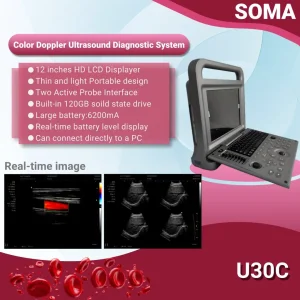
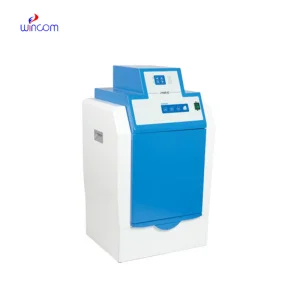

Shenzhen BioX Medical Co., Ltd. is a leading professional manufacturer specializing in molecular diagnostic analysis systems, genetic testing solutions, and clinical laboratory equipment. Established in 2017, the company is headquartered in Shenzhen, China, a global epicenter for biomedical engineering, medical device development, and advanced micro-manufacturing.
Operating within a modern manufacturing infrastructure covering more than 9,000 square meters and powered by a highly specialized workforce of over 200 employees, BioX Medical focuses on the end-to-end research, development, production, and supply of molecular diagnostic technologies. Our systems serve clinical laboratories, reference hospitals, academic research institutions, public health organizations, and biotechnology firms globally.
BioX Medical's comprehensive product catalog features high-throughput PCR amplification platforms, automated nucleic acid purification stations, multiplex genetic analyzers, pathogen detection panels, and workflow integration solutions. By integrating state-of-the-art optical systems, precise thermal control mechanisms, and intuitive diagnostic software, we help laboratories streamline operations, enhance analytical sensitivity, and maintain strict diagnostic reliability.
Supported by a multidisciplinary team of mechanical, electrical, and biomedical software engineers, we invest significantly in annual R&D. Strict quality management protocols are embedded throughout design, fabrication, assembly, and testing phases to ensure global standard compliance. This high level of specialization allows BioX Medical to provide agile, scalable OEM/ODM partnerships for international distributors and global diagnostic brands.
The global molecular diagnostics sector is experiencing a rapid paradigm shift. Real-Time Quantitative Polymerase Chain Reaction (qPCR) remains the gold standard in nucleic acid amplification, playing a critical role in infectious disease management, oncology profiling, pharmacogenomics, and agricultural research. Globally, the demand for fast, reliable, and cost-effective testing tools has driven clinical labs to replace traditional testing methods with automated Real-Time PCR instruments.
Chinese manufacturers have established themselves as key contributors to this global medical transition. Through significant investments in local R&D and supply chain optimization, companies like Shenzhen BioX Medical deliver high-performance diagnostic devices that match Western industry standards at competitive price points.
By leveraging Shenzhen's advanced microelectronics and optoelectronic supply chains, BioX Medical manufactures thermal cyclers with robust mechanical stability. Key components, such as high-performance Peltier modules and optical detectors, undergo rigorous testing. This vertically integrated manufacturing strategy reduces supply delays, enabling timely delivery to global buyers during high-demand periods.
Western diagnostic solutions often require expensive maintenance packages and proprietary reagents. In contrast, Chinese exporters design platforms with open-reagent capabilities. This allows laboratories in developing markets across Latin America, Africa, and Southeast Asia to run diagnostic assays using regional reagents, lowering per-test costs and improving accessibility.
Real-Time PCR systems depend on precise temperature control and optical detection to quantify target DNA or RNA sequences. The engineering behind these instruments determines their clinical sensitivity and specificity. BioX Medical designs platforms utilizing advanced optical and thermal components to achieve reproducible diagnostic results.
Precise temperature management is critical for accurate denaturation, annealing, and extension phases. Our instruments employ customized thermoelectric Peltier modules that support heating and cooling rates up to 6.0°C/s. This helps minimize non-specific amplification and shorten protocol runtimes.
Our optical detection systems utilize long-life, maintenance-free LEDs to excite fluorophores across different wavebands. Optical signals are captured by high-sensitivity photodiode arrays or cooled CCD sensors, reducing crosstalk between dye channels and supporting multiplex diagnostic assays.
Built-in spatial calibration features help normalize differences in signal intensity across the microplate. This ensures consistent data acquisition across all 96 or 384 wells, eliminating the need for reference dyes in standard diagnostic workflows.
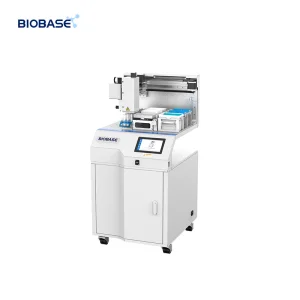
For high-throughput requirements, our systems interface with automated sample preparation units (e.g. Bk-Pr32). This integration automates the nucleic acid extraction and setup stages, reducing manual handling steps and potential contamination risks.
While clinical diagnostics remain the primary use case, qPCR technology is widely used across various industrial and research fields. Modern real-time thermocyclers serve as critical quality control and research tools worldwide.
In healthcare, real-time PCR is key for identifying pathogens, including respiratory viruses, gastrointestinal bacteria, and sexually transmitted infections. Multiplex PCR assays allow clinical laboratories to test for multiple target pathogens from a single patient sample, helping to speed up diagnosis and support clinical decision-making.
Oncology labs use qPCR to detect gene mutations, copy number variations (CNVs), and gene expression changes. Measuring these molecular changes helps oncologists design targeted therapeutic regimens. In pharmacogenomics, identifying patient genetic variants helps predict drug response profiles and avoid adverse reactions.
Agricultural laboratories use qPCR to screen food products for bacterial contaminants (e.g., Salmonella, Listeria) and verify genetically modified crop lineages. In veterinary medicine, it enables rapid diagnostic screening for livestock diseases, protecting animal health and agricultural supply chain stability.
Navigating international medical regulations is critical when exporting diagnostic equipment. Shenzhen BioX Medical designs and manufactures its platforms in compliance with global standards, ensuring smooth integration into clinical diagnostic labs.
Our manufacturing facilities operate under the ISO 13485 quality management standard for medical devices. The primary PCR product lines carry CE-IVD marking, validating their compliance with European Union health, safety, and environmental protection laws. This documentation supports import clearance processes in countries recognizing CE certification.
To support laboratory validation requirements, we supply complete Installation Qualification (IQ), Operational Qualification (OQ), and Performance Qualification (PQ) documentation. We also offer online technical validation support to assist local service engineers during system setup.
Additionally, our technical support teams work with regional distributors to establish localized spare parts inventories and training programs. This helps ensure customers receive timely technical maintenance, minimizing equipment downtime in clinical laboratory settings.
A visual overview of Shenzhen BioX Medical Co., Ltd.'s production floors, research facilities, assembly units, and quality control departments.
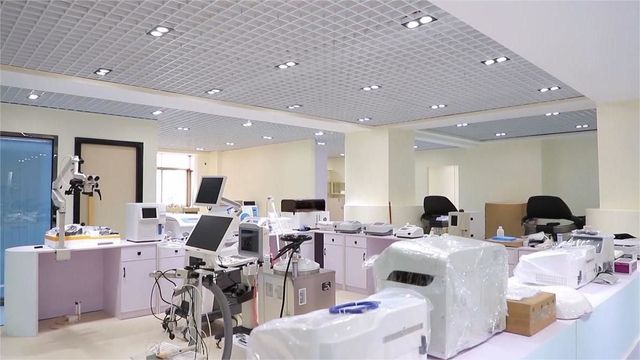

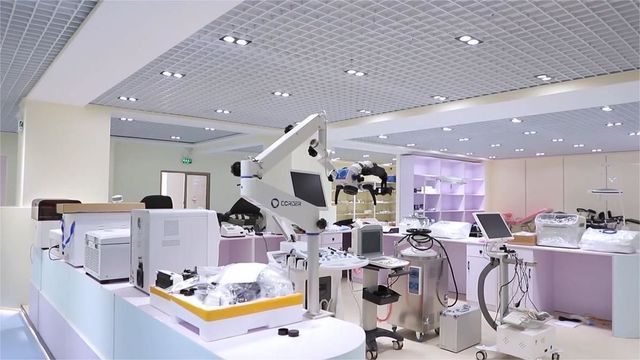
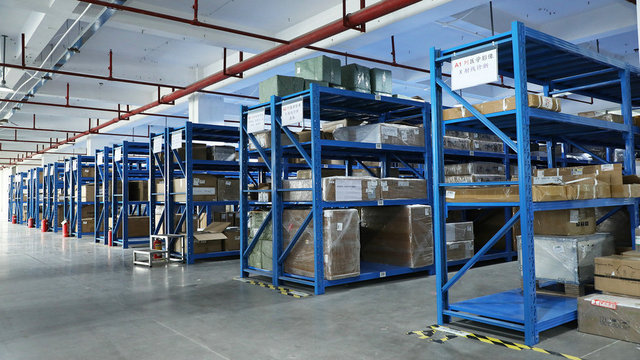
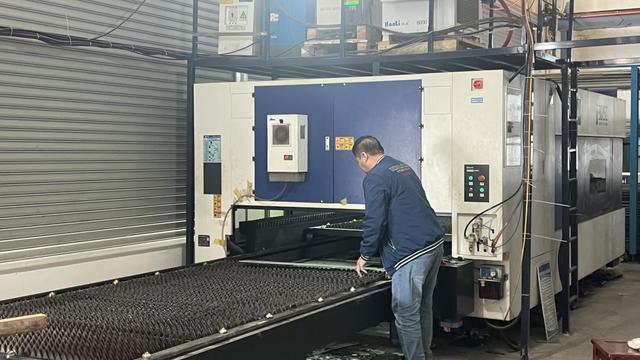
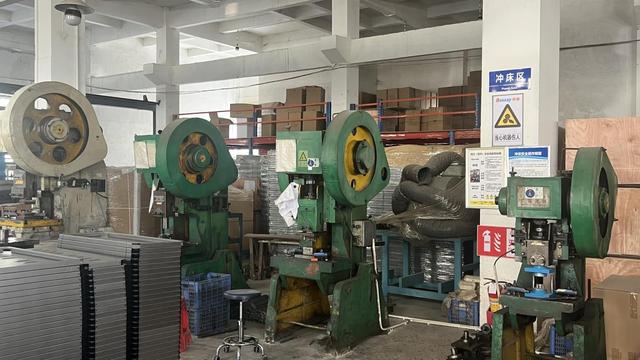
Molecular diagnostics continues to advance, and BioX Medical is evolving its design roadmap to keep pace. We are actively developing technology in several key areas to meet changing laboratory requirements:
Traditional PCR assays require centralized laboratory facilities and specialized operators. We are developing compact, portable microfluidic qPCR platforms to bring high-accuracy molecular testing closer to the patient, enabling faster results in emergency clinics and remote field stations.
To support absolute quantification without standard curves, our R&D team is developing digital PCR solutions. By partitioning samples into thousands of individual nanoliter droplets, dPCR enables precise quantification of low-abundance targets, which is particularly useful for liquid biopsy and oncology applications.
Modern laboratories increasingly rely on digital data integration. Our next-generation software platforms feature IoT connectivity, enabling secure data uploads to laboratory information systems (LIS). This supports remote instrument monitoring, automated quality control tracking, and multi-center diagnostic studies.
Explore our extended catalog of professional medical platforms, industrial components, and diagnostic software solutions designed for global export.


 BioX Medical